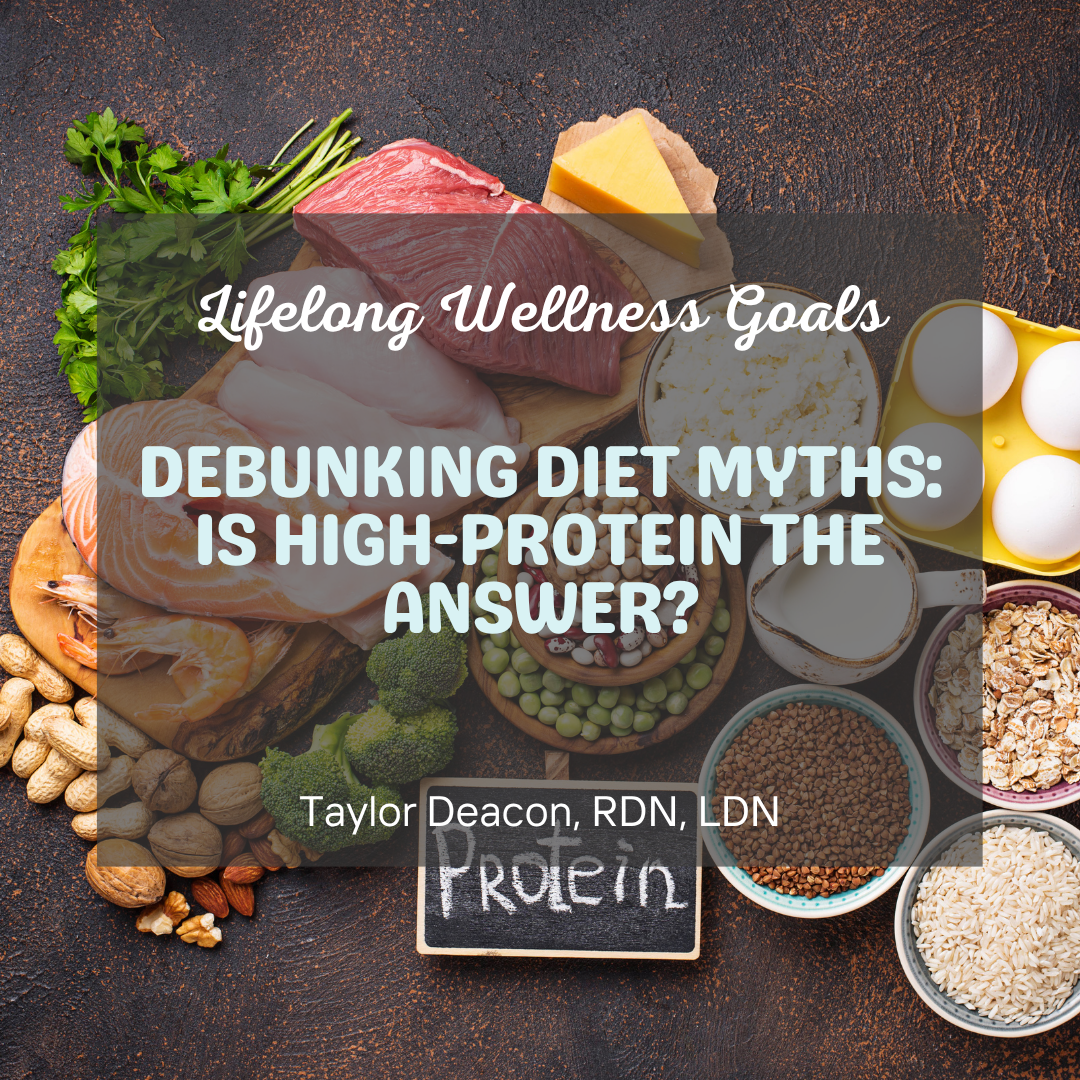
Let’s be honest, protein has been having its moment, and one question I commonly get asked as a dietitian is, “How much protein should I be eating?” or, “How do I hit this excessively high amount of protein in a day?”
Scroll through social media for a few minutes and you'll probably see someone talking about adding protein powder to their coffee or sharing their favorite cottage cheese "hack."
And while protein is an important part of keeping your body nourished, I think it may be a little overhyped right now—and that can cause us to miss out on other important nutrients, too.
And as a registered dietitian who takes a non-diet approach to nutrition, I think it's worth taking a step back from the latest nutrition trend and looking at the bigger picture.
Because protein is important.
But more protein isn't automatically better, and you don't need to turn protein into another food rule.
Let's talk about it.
What Is a High-Protein Diet, Anyway?
There's not one specific definition of a "high-protein diet."
The amount of protein someone needs can vary depending on things like age, body size, activity level, overall health, goals, and life stage.
But right now, "high protein" has become more of a wellness trend than a specific nutrition plan.
You might see people aiming for a high number of grams per day or trying to make nearly every food they eat "high protein."
Protein has also become an especially popular topic for people taking GLP-1 medications, where maintaining muscle mass while losing weight can be an important consideration.
And there are legitimate reasons to pay attention to protein.
Protein plays an important role in muscle maintenance and repair, helps with many functions throughout the body, and can contribute to feeling satisfied after meals.
So no, protein isn't a problem.
The problem is when we start believing that more protein is the answer to everything.
Are there benefits to protein?
There are some very real benefits to including protein in your meals and snacks.
Protein can help contribute to fullness and satisfaction, especially when it's paired with other foods that provide carbohydrates, fat, and fiber.
It's also important for maintaining and repairing muscle, which can be particularly important if you're strength training, getting older, recovering from an illness or injury, or experiencing weight loss.
And sometimes, when someone starts intentionally eating more protein, they also start eating more balanced meals overall.
For example, instead of grabbing a handful of crackers as a snack, they might pair them with cheese or Greek yogurt.
Instead of having toast by itself for breakfast, they might add eggs.
Those changes can absolutely help someone feel more satisfied and energized.
But here's where I want to pump the brakes a little:
That doesn't necessarily mean you need to follow a "high-protein diet."
You may simply benefit from including a protein source more consistently.
There's a difference.
When "More Protein" Becomes Another Diet Rule
This is the part I think gets left out of a lot of the high-protein conversation.
When protein becomes something you have to hit perfectly every single day, it can start to feel a lot like dieting.
Suddenly you're asking yourself:
“How many grams have I had today?”
Turning meals into a math problem instead of paying attention to your hunger, fullness, and what sounds satisfying.
“Does this snack have enough protein?”
Focusing on whether a snack meets a protein goal instead of simply enjoying it and noticing how satisfied you feel.
“I only got 80 grams today. I need to make up for it at dinner.”
Feeling like you need to hit an excessive protein goal without knowing whether that amount is actually appropriate for you or discussing your individual needs with a healthcare professional, such as a registered dietitian.
And if you've been working on healing your relationship with food, that kind of tracking and number-chasing may not actually feel helpful.
It can also cause us to focus so much on protein that we forget about the other foods our bodies need.
I've seen this happen when people start building meals around protein first and then try to squeeze everything else onto the plate.
The vegetables get pushed aside.
The carbohydrate becomes something they feel like is off limits.
Fats get labeled as unnecessary or “fattening.”
And suddenly, we're back in the familiar territory of restriction and food rules—which can make it harder to give our bodies the variety of nutrients they truly need.
High-protein doesn't automatically mean healthier—or better for you.
And a meal doesn't become unhealthy because it isn't packed with protein.
What About Fiber and Carbohydrates?
One of my biggest concerns with the current high-protein trend is how easily it can overshadow other important nutrients.
Your body needs protein.
But it also needs carbohydrates, fats, fiber, vitamins, minerals, and plenty of other nutrients.
Carbohydrates are an important source of energy.
Fiber supports digestive health and can also play a role in heart health, blood sugar management, and keeping you satisfied.
Dietary fats are important for things like hormone production, brain health, and absorbing fat-soluble vitamins.
So instead of asking:
"How can I get more protein?"
I often encourage my clients to ask:
"What would make this meal more satisfying and nourishing?"
Sometimes the answer is protein.
Sometimes it's adding a carbohydrate.
Sometimes it's a little fat.
Sometimes it's a fruit or vegetable.
And often, it's a combination of all of them.
So... How Much Protein Do You Actually Need?
This is where I wish I could give you one magic number.
But nutrition doesn't really work that way.
Your protein needs depend on you.
Your body size, activity level, age, health, goals, and other individual factors can all play a role.
More importantly, you don't need to obsess over hitting an exact number to eat well.
For many people, a much simpler place to start is to ask yourself:
"Is there a source of protein here?"
For example:
Eggs with toast and fruit
Greek yogurt with granola and berries
Chicken, rice, and roasted vegetables
A turkey sandwich with fruit
Pasta with meat sauce and a side salad
Beans and cheese in a quesadilla
Peanut butter on toast with a banana
And if you're looking for an easy, protein-rich snack to keep on hand, Chomps grass-fed beef jerky sticks are one option I like. They're convenient, portable, and the Original Beef stick provides 10 grams of protein.
You could pair one with something else, like fruit, crackers, or pretzels, to create a more satisfying snack with a combination of nutrients.
Notice that none of these meals are just protein.
That's intentional.
A balanced meal includes more than one nutrient, and you don't need to make protein the star of every meal in order to nourish yourself well.
A More Balanced Approach to Protein
Rather than trying to make your diet "high protein," I'd encourage you to think about including protein consistently.
That's a much more flexible goal.
Instead of tracking grams, start noticing the protein sources you already enjoy.
Instead of buying every new "high-protein" product that hits the shelves, think about foods that naturally provide protein and that you actually like eating.
Instead of worrying about whether your breakfast has 30 grams of protein, ask yourself:
"Will this breakfast keep me satisfied and energized?"
And instead of trying to build the "perfect" high-protein meal, aim for a meal that includes a combination of foods that you enjoy and that help you feel nourished.
This approach gives you the benefits of protein without turning it into another rule you have to follow perfectly.
And if you have higher protein needs...
There are absolutely times when intentionally prioritizing protein can be helpful.
This might be the case for someone who is strength training, recovering from an illness or injury, navigating certain health conditions, experiencing weight loss, or taking a GLP-1 medication.
If you have a specific reason to prioritize protein, that's something worth discussing with a registered dietitian or another qualified healthcare professional who can help you determine what makes sense for you.
You don't need to rely on a random protein goal from TikTok or Instagram.
The Bottom Line
Protein is important.
But you don't need to worship it or track it perfectly.
You also don't need to make every meal "high protein" to eat a nutritious diet.
Protein is simply one part of the bigger picture.
If you're someone who tends to get caught up in nutrition numbers and rules, I'd much rather see you build a balanced meal, eat consistently, include foods you enjoy, and pay attention to how your body feels than spend your day trying to hit the perfect protein number.
Because nutrition should support your life—not become another thing you have to get perfectly right.
Want Help Making Nutrition Feel Simpler?
If you're tired of constantly wondering whether you're eating the "right" foods, getting enough protein, or following the latest nutrition advice, you don't have to figure it all out on your own.
My approach to nutrition is about helping you feel more confident and less overwhelmed around food—without rigid rules, tracking, or another diet to follow.
Start with 7 Days to Nourished
If you're looking for a simple place to start, 7 Days to Nourished gives you seven days of simple nutrition guidance and practical ideas sent straight to your inbox to help you feel more confident building balanced meals and snacks—without overthinking every food choice.
It's a great way to start simplifying your approach to nutrition and focus on nourishing your body instead of following more food rules.
Want More Personalized Support?
If you're ready for more individualized support, I also work 1:1 with women who want to improve their relationship with food, build sustainable nutrition habits, and feel more confident in their choices without dieting.
We'll focus on your body, your goals, your lifestyle, and what actually works for you—not a one-size-fits-all plan.
You don't need another set of rules telling you how to eat. You just need the right support to figure out what works for you. 💛