What if meal planning was a tool for more freedom, not control?
If you've ever sat down on Sunday, spent hours planning out every meal for the week, gone grocery shopping, and felt completely on top of things… only to lose all motivation by Wednesday, you're not alone!
Meal planning can be a great way to take some of the guesswork out of deciding what to eat, save time during busy weeks, and make it easier to nourish your body consistently. But sometimes, we make it more complicated (and more rigid) than it needs to be.
You don't need a perfectly planned menu, seven different recipes, or a fridge full of prepped meals to make meal planning work for you.
In fact, I think one of the best ways to approach meal planning is to make it more flexible!
Let's talk about how to meal plan without restricting yourself, create a little more structure around meals, and still leave plenty of room for flexibility.
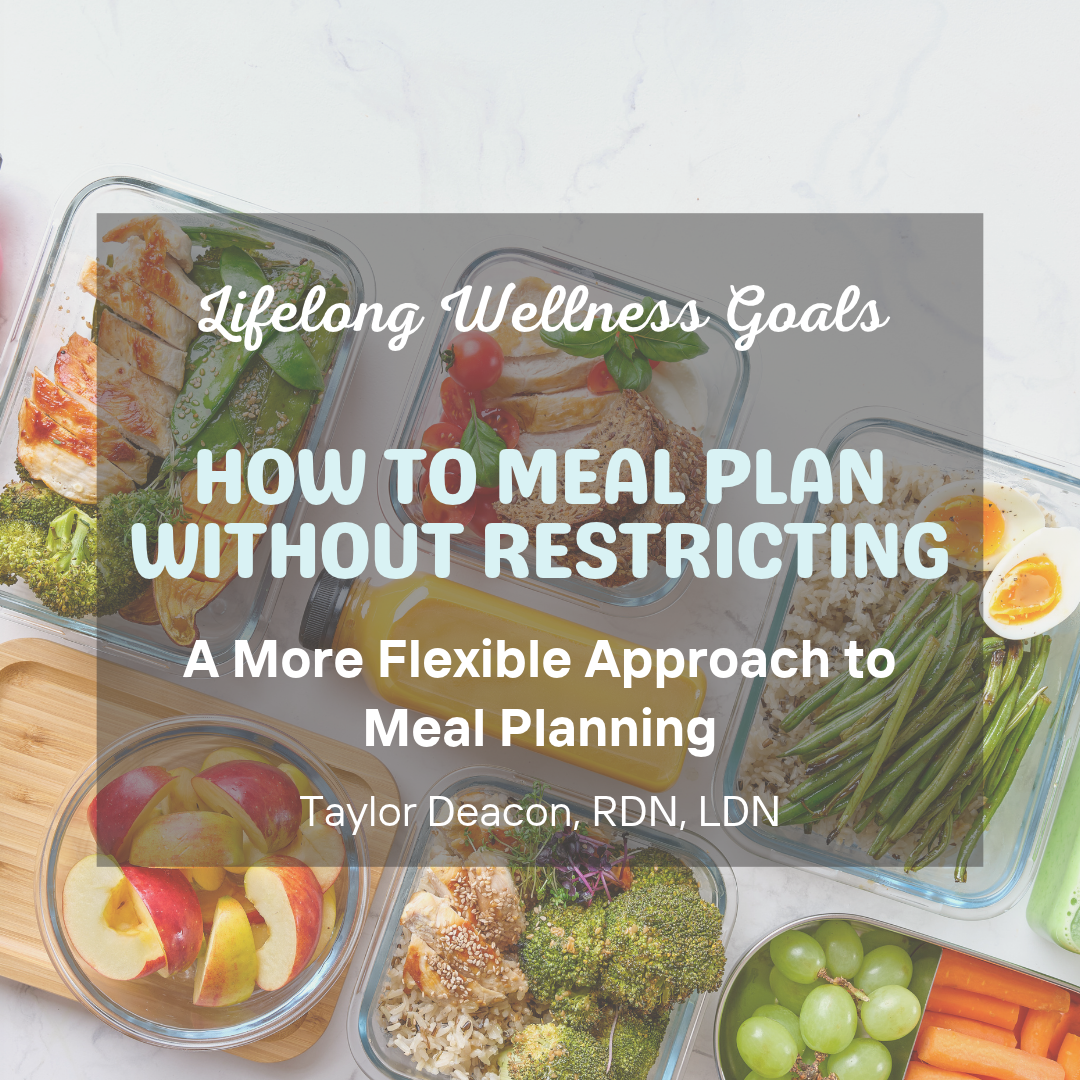
Why Traditional Meal Plans Don't Always Work
Traditional meal plans can sometimes be overly rigid, especially when they're based on macro- counting, strict portions, or making a big batch of the same meal that you feel obligated to eat all week.
But here's the thing: life doesn't always follow a meal plan like this.
Maybe you get home later than expected, your schedule changes, or you just don't feel like eating what you planned three days ago.
And that's okay!
The problem with overly rigid meal planning is that it can leave very little room for real life. When you feel like you've gone "off plan," it's easy to think you've failed or that you need to start over next week.
Meal planning shouldn't create more stress around food. It should help take some of that stress away.
Instead of planning every single meal and snack, let's focus on creating a flexible structure that makes eating consistently and getting a variety of foods easier.
4 Ways to Make Meal Planning More Flexible
You don't need to completely change how you approach meal planning. A few small adjustments can make a big difference!
1. Plan Ingredients Instead of Full Recipes
One of my favorite ways to simplify meal planning is to start with the basics rather than choosing a specific recipe for every meal.
Think about 2-3 options you’d like available from each common food group.
For example:
Proteins: Chicken, ground turkey, eggs, salmon, beans, peas, tofu, or Greek yogurt
Produce: Broccoli, carrots, bell peppers, spinach, berries, apples, bananas, or whatever sounds good
Carbs and grains: Rice, potatoes, pasta, tortillas, or whole grain bread
Fats and extras: Avocado, olive oil, nuts, cheese, sauces, and dressings
Having these foods available gives you plenty of options to mix and match depending on what you're in the mood for.
You might make chicken bowls one night, use leftover chicken in a wrap for lunch the next day, or throw together a quick stir-fry with whatever vegetables you have already chopped up or from dinner the night before.
You have the building blocks for balanced meals without feeling like you have to follow a specific recipe.
2. Keep 2- 3 Staple Meals in Your Rotation
You know those meals you can make without thinking twice? The ones that feel easy to prepare, you know what ingredients to keep stocked, and can usually get on the table without much effort?
Those are your staple meals!
I recommend keeping about three go-to meals in your rotation that you can come back to throughout the month.
Some examples might include:
Taco bowls with ground turkey, rice, beans, veggies, and your favorite toppings
Sheet pan chicken with potatoes and roasted vegetables
Pasta with meat and veggie sauce, a side salad, and garlic bread
These meals don't have to be fancy or complicated. They're simply reliable options that make dinner a little easier when you're short on time or don't feel like trying something new.
3. Schedule One "Whatever Sounds Good" Night
This might be my favorite meal planning tip!
Instead of assigning a specific dinner to every night of the week, leave one night open for whatever sounds good.
Maybe it's takeout, homemade pizza, breakfast for dinner, leftovers, a new recipe or something completely different.
Having a flexible night built into your week gives you permission to change things up without feeling like you're getting off track.
And honestly, sometimes you just don't know what you're going to want to eat five days from now. There's nothing wrong with leaving yourself some room to decide!
4. Batch Prep ONE Thing Instead of Everything
Meal prep and meal planning are not the same thing!
You can meal plan without spending your entire Sunday cooking and portioning out meals for the week.
Instead of trying to prep everything, choose one or two things that will make your week easier.
For example:
Cook a batch of rice or quinoa
Prepare a protein like shredded chicken or ground turkey
Wash and chop a few vegetables and berries
Hard-boil some eggs or roast chickpeas for easy snacks
Prep a batch of overnight oats, pancakes, or baked oats for breakfast
Even having one ingredient ready to go can save you time when you're putting meals together during the week.
Remember, convenience foods count, too! Purchasing pre-cut vegetables, frozen grains, or a rotisserie chicken can be just as helpful as preparing everything yourself.
What Does a Flexible Meal Plan Actually Look Like?
Sometimes it's easier to see how this works with an example!
Here's what a flexible week might look like using a few anchor meals, some prepared ingredients, and room for flexibility.
Example of a Flexible Weekly Meal Plan
Monday: Taco bowls with ground turkey or chicken, rice, beans, and veggies.
Tuesday: Leftover taco ingredients turned into quesadillas.
Wednesday: Sheet pan chicken with potatoes and broccoli.
Thursday: Whatever sounds good! Maybe takeout, homemade pizza, or an easy meal.
Friday: Pasta with meat sauce and a side salad.
Saturday: Flexible night! Use leftovers, try something new, or go out to eat.
Sunday: Keep it simple with a favorite Sunday dinner or use what you have on hand.
Not every meal is completely planned out, and some ingredients can be used more than once.
That's the beauty of flexible meal planning!
You have enough structure to make grocery shopping and getting meals on the table easier, but you're not locked into eating something specific if you don’t want to be.
Adjust Your Meal Planning Based on Your Week
Another thing I encourage you to remember is that your meal planning routine doesn't have to look the same every week.
Some weeks are busier than others, and your approach can change depending on what you have going on.
During busy weeks:
Stick with your 2-3 staple meals.
Use convenient options like frozen vegetables, canned beans, rotisserie chicken, and pre-cooked grains.
Keep easy breakfast and lunch options available such as oats, fruit, or a salad kit.
Don't be afraid to repeat meals or lean on convenience foods!
During slower weeks:
Try a new recipe you've been wanting to make.
Spend a little more time prepping ingredients or doing a freezer meal for busier weeks.
Experiment with different ingredients like a new fruit or veggie, an ingredient you’ve always wanted to try, or different herb and spice combinations.
Use My Meal Planning Guide to Get Started
If you're someone who likes having a little structure to get started, my Weekly Meal Planning Guide is a great place to begin!
It's designed to help you organize your meals, plan your grocery shopping, and take some of the guesswork out of deciding what to eat throughout the week.
You can use it to plan out your staple meals, make a grocery list, and identify which ingredients you'd like to have available. Think of it as a starting point, not a set of rules you have to follow!
Meal planning should be something that supports you, not another thing on your to-do list that you feel like you have to get exactly right.
Ready to make meal planning a little easier?
Download my Weekly Meal Planning Guide and start creating a routine that works for you.

If you struggle to figure out what you're going to eat each week and want to take one less thing off your mind each day, this guide is for you!
With quick tips for meal planning/prep, balanced recipe ideas to incorporate each week, and grocery shopping lists already written for you with space to add more, this guide is here to make your week to week eating routine feel consistent and effortless
Final Thoughts
You don't need a rigid meal plan to nourish your body consistently.
A little planning can go a long way when it comes to having balanced meals available, keeping your energy levels supported, and reducing the daily stress of figuring out what to eat.
Start small. Pick a few meals you enjoy, keep some versatile ingredients on hand, and give yourself permission to change your plans.
Because the best meal plan isn't the one you follow perfectly. It's the one that actually works for your life!