If you've ever thought, "I know I should eat more vegetables, but I just don't like them," you're definitely not alone.
As a registered dietitian, I hear this all the time. The good news? Eating more vegetables doesn't have to mean forcing yourself to eat plain salads or steamed broccoli every day.
One of the biggest misconceptions about healthy eating is that vegetables only "count" if they're fresh, plain, and eaten on their own. That's simply not true.
Gentle nutrition is about finding realistic, enjoyable ways to nourish your body—and vegetables can absolutely be part of that.
Why Are Vegetables Important?
Vegetables provide fiber, vitamins, minerals, antioxidants, and carbohydrates that help fuel your body. They can support digestion, heart health, immune function, and help keep your meals fresh and satisfying.
But here's something I always remind my clients: you don't have to eat vegetables perfectly or at every meal to benefit from them. Every serving counts, whether it's frozen broccoli with dinner, salsa on your tacos, or spinach mixed into your pasta.
If your goal is to eat more vegetables, the answer isn't forcing yourself to eat foods you don't enjoy. It's finding simple, realistic ways to include vegetables in meals you already love.
Here are five of my favorite ways to eat more vegetables without making mealtime feel like a chore.
1. Find a Cooking Method You Actually Enjoy
If you think you don't like vegetables, you may just not like the way you've had them prepared.
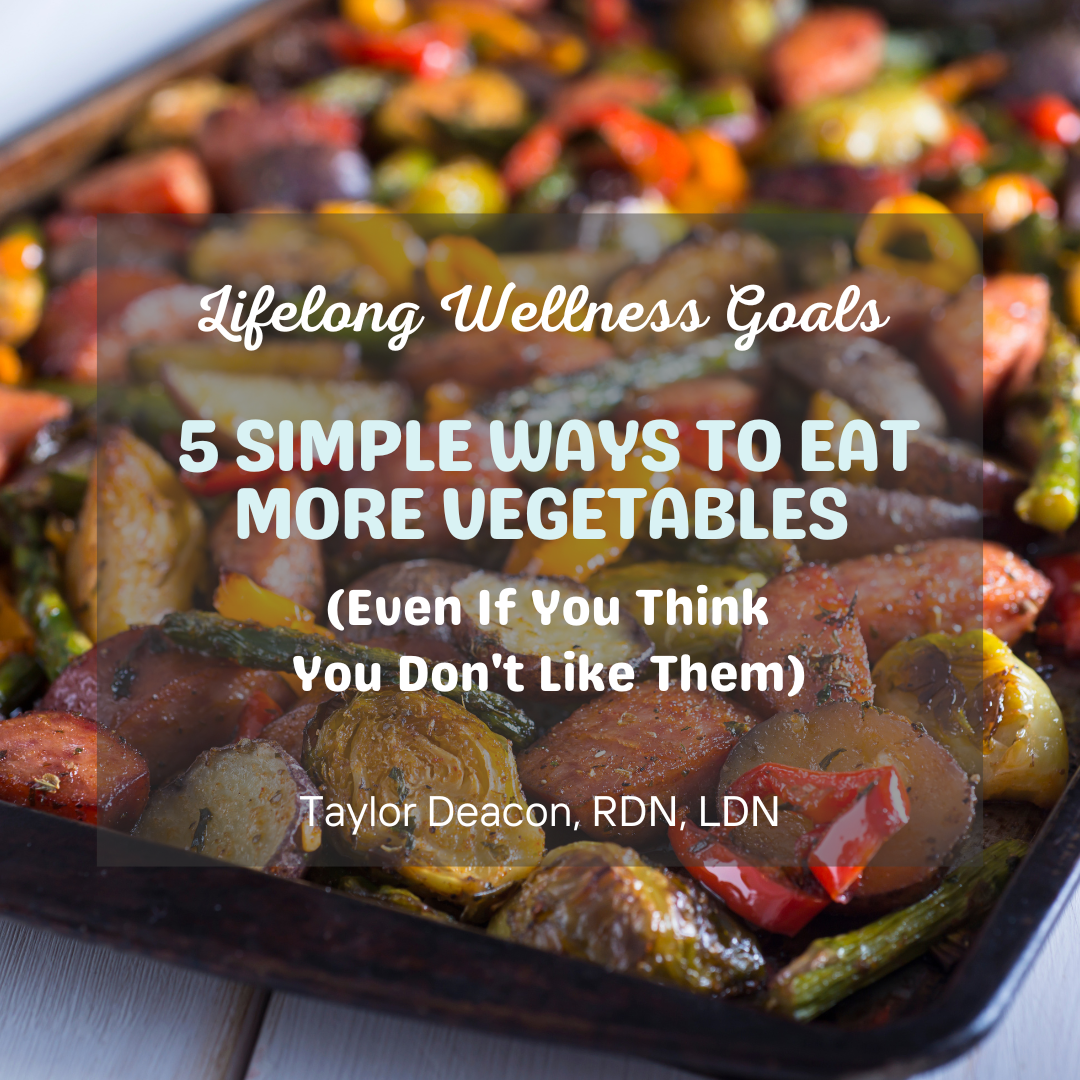
Roasting, grilling, air frying, or sautéing can completely change both the flavor and texture of vegetables. A crispy roasted Brussels sprout tastes very different from one that's been steamed, and air-fried broccoli has a completely different texture than boiled broccoli.
Don't be afraid to experiment. You might discover you love vegetables but just haven’t found your favorite way to prepare them yet.
2. Add Flavor Without the Guilt
Vegetables don't have to be plain to be healthy.
Adding ranch dressing, hummus, pesto, parmesan cheese, teriyaki sauce, salsa, or your favorite seasoning doesn't "cancel out" the nutrients in your vegetables. And if adding flavor helps you enjoy them more often, it's supporting a sustainable eating habit.
The goal isn't to force yourself to eat foods you don't enjoy. It's to create meals you actually look forward to eating.
Dietitian Tip: Enjoying your food is part of healthy eating.
3. Choose the Option That's Easiest for You
Fresh isn't the only healthy choice.
Frozen vegetables are picked and frozen at peak ripeness, making them just as nutritious—and sometimes even more nutritious—than fresh vegetables that have spent days traveling to the grocery store.
They're also budget-friendly, convenient, and help reduce food waste.
Remember, the "best" vegetables are the ones you'll actually eat.
4. Add Vegetables to Foods You Already Love
You don't have to build your meals around vegetables to eat more of them.
Instead, think about simple ways to include them in foods you're already making.
Some easy ideas include:
Spinach in scrambled eggs
Bell peppers or onions in tacos or fajitas
Mushrooms or spinach in pasta
Broccoli stirred into mac and cheese
Extra vegetables in chili, soup, or casseroles
Spinach or peppers on homemade pizza
Even tomato-based foods like salsa, marinara sauce, and pizza sauce contribute vegetables to your meal.
Small additions can make a big difference over time.
5. Let Go of the "Perfect" Way to Eat Vegetables
One of the biggest barriers to eating more vegetables is believing there's only one "right" way to do it.
Maybe you've convinced yourself vegetables only count if they're fresh, plain, organic, or eaten as a side salad.
But nutrition isn't all-or-nothing.
Whether your vegetables are frozen, roasted, dipped in ranch, mixed into pasta, blended into soup, or spread across your pizza, they still provide nourishment.
Progress isn't about eating vegetables perfectly—it's about finding realistic ways to include more of them in your life in a way you genuinely enjoy.
For more tips and inspiration, follow along here!
Healthy Eating Doesn't Have to Feel Complicated
If there's one thing I hope you take away from this post, it's this: eating more vegetables isn't about being perfect.
It's about finding simple, enjoyable ways to nourish your body that fit your life.
Because learning to enjoy vegetables is just one piece of the puzzle.
Healthy eating isn't built on food rules or trying to have the "perfect" diet. It's built on small, realistic habits that add up over time.
If you're ready to start building those habits, I'd love to invite you to join my free 7 Days to Nourished series.
For seven days, you’ll get one simple nutrition habit each day that's designed to help you nourish your body without dieting or overthinking every food choice.
Together, we'll cover topics like:
💛 Building balanced meals that keep you satisfied
💛 Eating consistently for steady energy throughout the day
💛 Simple ways to add nourishment without restriction
💛 Letting go of the all-or-nothing mindset around food
💛 Creating healthy habits that actually fit your real life
Each day takes just a few minutes to read and gives you one practical action step you can start using right away.
If you've been wanting to feel more confident with nutrition—without another meal plan or set of food rules—7 Days to Nourished is the perfect place to start.