For many people, “healthy eating” has slowly turned into constant monitoring, second-guessing, and mental exhaustion. Food starts to feel like something to manage instead of something that supports your life.
But here’s something we don’t hear often enough:
Food peace and health are not opposites. They can exist together.
At Lifelong Wellness Goals, we believe you can care about your health without obsessing over every bite, every meal, or every “good” or “bad” choice.
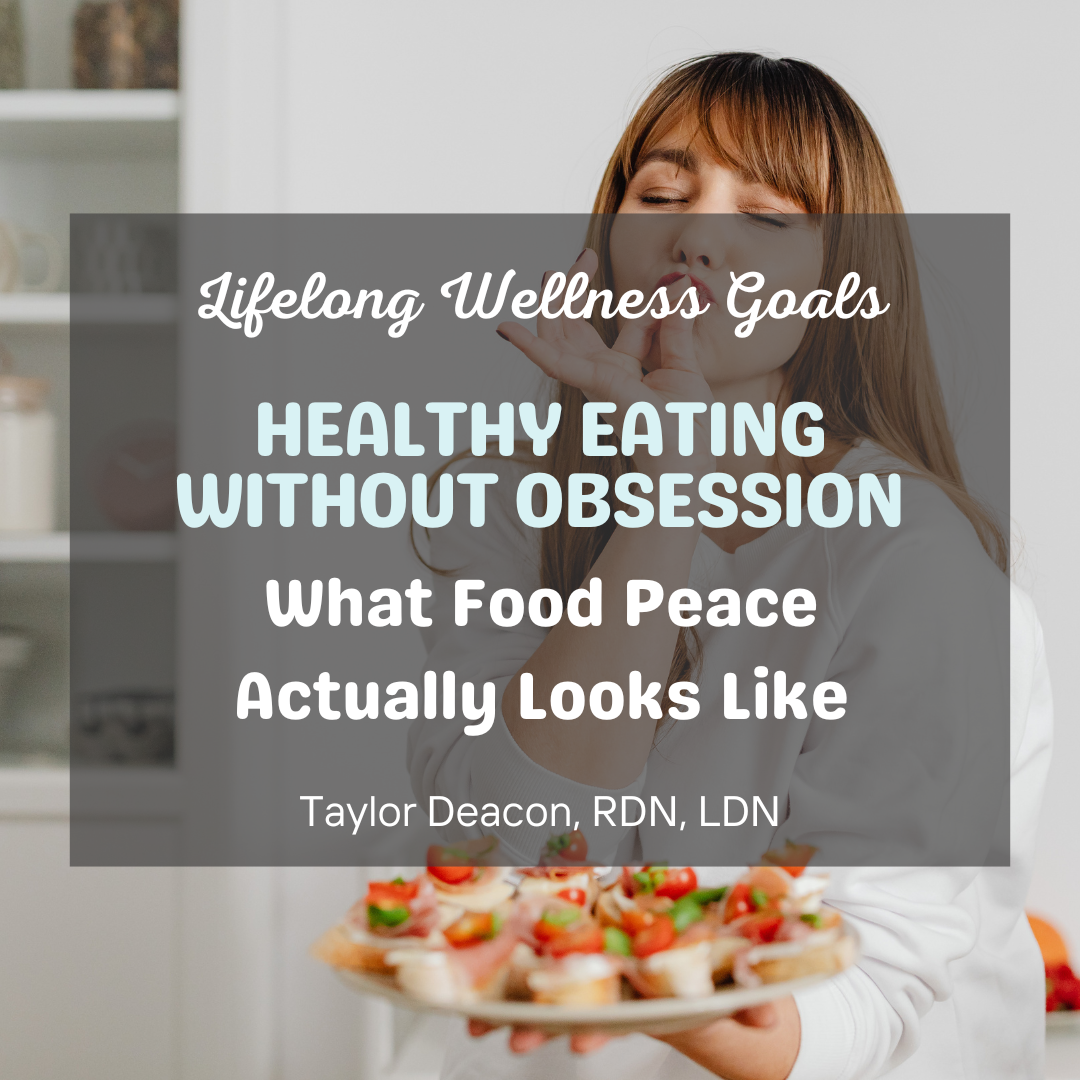
Food peace means having a relationship with food where eating supports your health and your life without constant stress, guilt, or overthinking.
It allows room for both nourishment and flexibility while removing the pressure that often comes with dieting.
You Can Care About Health Without Obsessing Over Food
Wanting to feel better, have more energy, improve lab work, or support long-term health does not mean you need to be consumed by food rules.
Food peace isn’t about ignoring health. It’s about removing unnecessary stress so healthy habits become more sustainable.
When food takes up less mental space, many people start to notice things like:
More consistent eating patterns
Better satisfaction with meals
Less guilt and shame around food
Improved trust in their body
More capacity to focus on other parts of life
Food peace allows health-supportive habits to happen without constant internal negotiation.
Food Peace Does Not Mean Giving Up
One of the biggest myths about food peace is that it means “not caring” about health anymore.
That’s not the case.
Food peace doesn’t mean giving up on health goals. It means letting go of extremes and choosing approaches that support both physical and mental well-being.
You can still:
Care about nourishment
Build balanced meals
Think about energy, digestion, and blood sugar
Make intentional food choices
What often changes is the tone behind those choices.
Instead of decisions being driven by control or fear, they start to come from awareness and care.
Structure Without Obsession
Structure can be helpful. Obsession is not.
Food peace usually lives somewhere in the middle, where there is:
Gentle structure instead of rigid rules
Awareness instead of hyper-focus
Consistency instead of perfection
Flexibility instead of chaos
Structure might look like regular meals, familiar go-to foods, or simple nutrition guidelines that guide choices without demanding constant attention.
Obsession tends to show up when food and body image become the main measure of success or self-worth.
The goal is to keep the structure that supports your health while letting go of the pressure that makes food feel heavy.
Journal Reflection
This is one way we practice food peace inside the Lifelong Wellness Goals Wellness Journal.
Try this reflection:
Where does food feel supportive right now, and where does it feel stressful? What would it look like to reduce pressure in just one area this week?
Food peace often starts with noticing, not fixing.
Why Wellness Is Harder Alone
If food feels overwhelming, it’s not because you lack willpower.
Most people don’t need more willpower.
They need support and perspective.
Wellness can be harder to navigate alone because:
There’s no outside perspective when doubt creeps in
Old patterns are easier to fall back into during stressful seasons
Perfectionism tends to grow in isolation
Setbacks can feel personal instead of normal
Research consistently shows that social support improves consistency and follow-through with health behaviors. Shared experiences and accountability help reduce burnout and make habits feel more sustainable.
Community Changes the Experience
Inside the Nourished Sisterhood, food peace is something we build together.
Community support can help by:
Normalizing struggles instead of shaming them
Offering encouragement on hard days
Sharing real life examples of balanced living
Removing the pressure to “do it perfectly”
Reinforcing that health is about more than food
Food peace tends to grow faster when people feel understood rather than judged.
You Don’t Have to Do This Alone
If this content resonates, it may be a sign that you don’t have to figure everything out by yourself.
Here are a few ways you can start getting support:
Start With Reflection
The Lifelong Wellness Goals Wellness Journal helps you slow down, reduce food noise, and reconnect with supportive habits at your own pace.
Build Consistency With Support
The Nourished Sisterhood Community offers accountability, education, and real-life conversations that help food peace and health coexist long-term.
Get Personalized Guidance
1:1 Nutrition and Wellness Support provides individualized care for those who want tailored structure, support, and clarity without extremes.
Food Peace Is Not the Absence of Care
It’s the presence of support.
Caring about your health doesn’t require obsession. And food peace doesn’t mean giving up on your well-being.
You’re allowed to want both health and a calmer relationship with food.
And you don’t have to do it alone.